Amir Beck · 18 October 2026
Exploring Data Integration Techniques for Optimizing Resource Allocation in Online Service Ecosystems
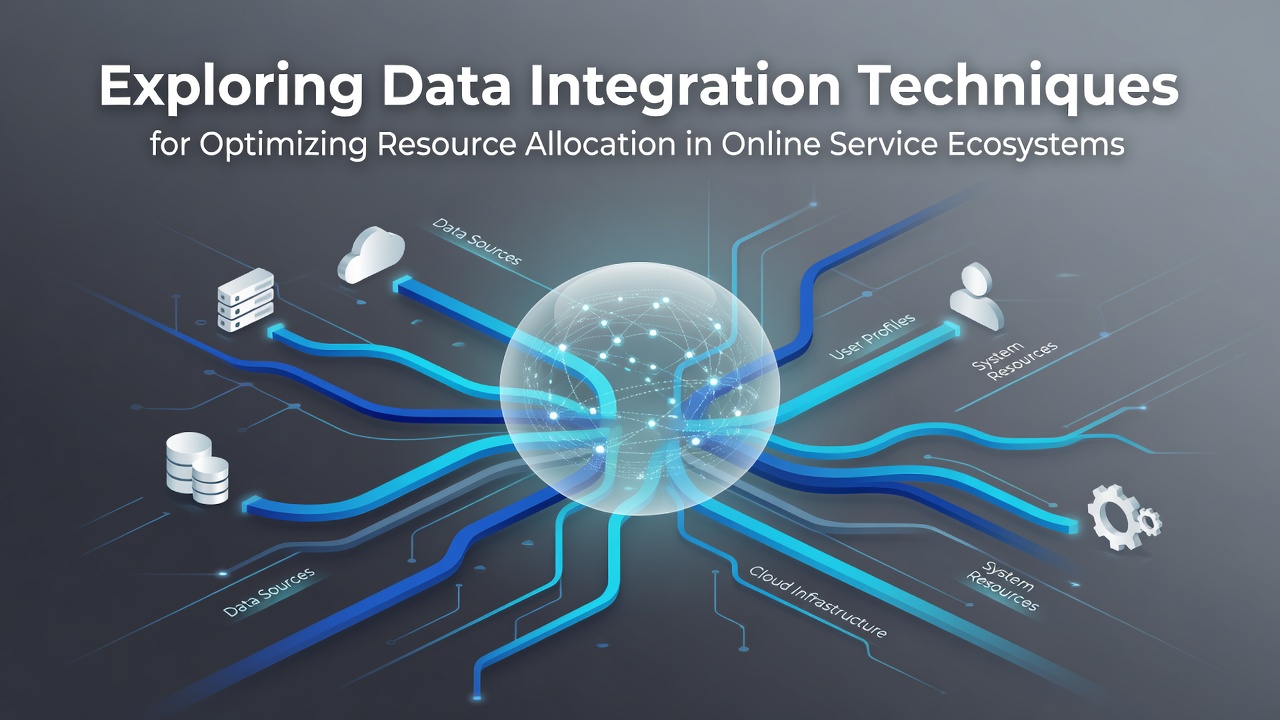
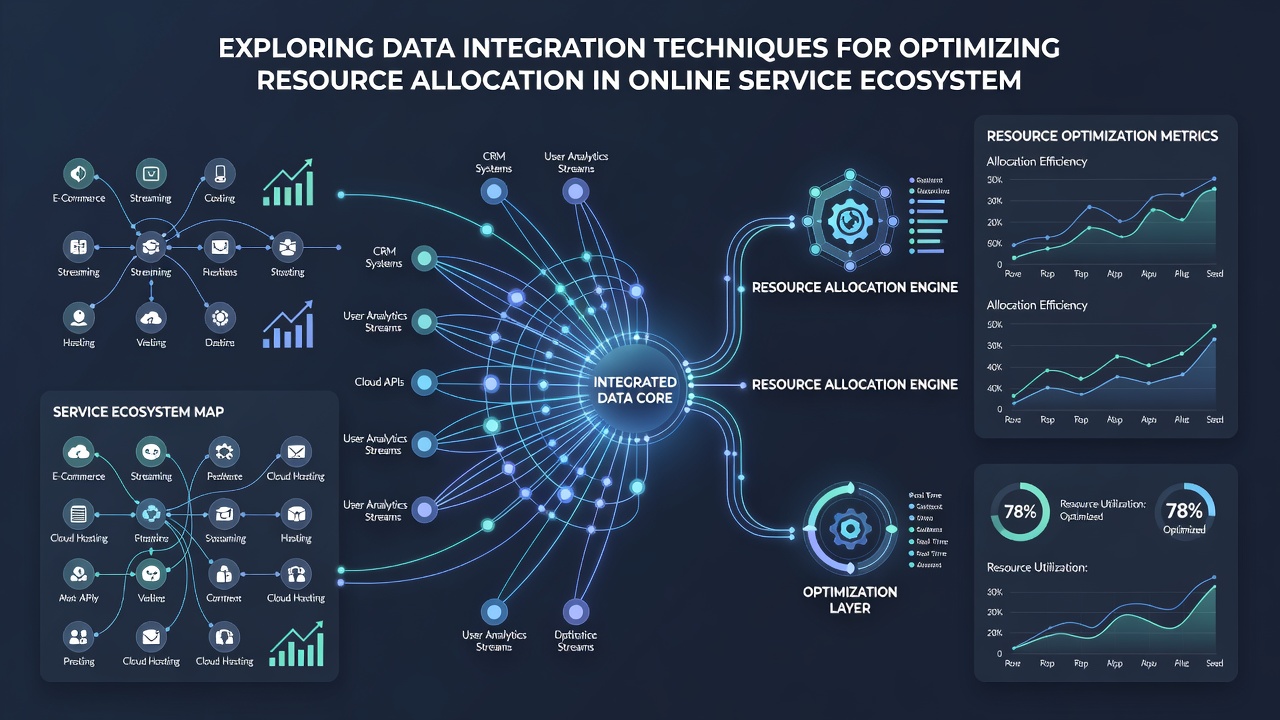
Data integration techniques have become central to how organizations manage resource allocation within online service ecosystems, where platforms must balance compute power, storage, bandwidth, and personnel across dynamic user demands. Researchers have documented multiple approaches that combine data from disparate sources such as customer interaction logs, infrastructure sensors, and third-party APIs into unified views that support real-time decision making.
Common methods include extract-transform-load pipelines that move batch data into centralized warehouses, application programming interface gateways that enable live queries between microservices, and event-streaming platforms that process continuous feeds from distributed systems. Each technique addresses different latency requirements, yet all aim to reduce waste by aligning supply with actual usage patterns observed across global networks.
Core Techniques in Practice
ETL processes remain foundational because they allow large historical datasets to be cleaned and merged before feeding into allocation algorithms. Organizations often layer these pipelines with change-data-capture mechanisms so updates propagate without full reloads, cutting processing time significantly. In contrast, API-driven integration supports on-demand access, which proves useful when service providers need to adjust container orchestration or virtual machine scaling within seconds of traffic spikes.
Event streaming solutions built on platforms like Apache Kafka or cloud-native equivalents capture telemetry from every node in an ecosystem. Analysts then apply windowed aggregations and predictive models to forecast demand hours or days ahead. Data shows that companies adopting hybrid approaches, combining batch ETL for compliance reporting with streaming for operational control, achieve tighter resource utilization rates than those relying on single-method strategies.
Impact on Resource Allocation
Once integrated, datasets feed directly into optimization engines that apply linear programming, reinforcement learning, or heuristic rules to distribute workloads. Observers note that precise matching of server capacity to predicted load reduces idle instances and lowers energy consumption per transaction. In October 2026, several large-scale platforms reported measurable gains after deploying unified data fabrics that spanned their content delivery networks and backend databases.
Take one logistics-oriented service provider that consolidated location data, vehicle telemetry, and customer order streams into a single repository. The resulting models enabled dynamic rerouting of compute resources during peak shopping periods, trimming over-provisioning by measurable margins. Similar patterns appear in content streaming and financial services, where integrated views of user sessions and infrastructure metrics guide auto-scaling policies.
Implementation Considerations Across Regions
Standards bodies have published frameworks that guide secure data movement while preserving privacy. The National Institute of Standards and Technology outlines reference architectures for federated data environments that many North American operators follow when linking internal systems to external partners. Meanwhile, reports from the OECD highlight how European and Asia-Pacific providers adapt similar principles to meet regional data-sovereignty rules without sacrificing allocation efficiency.
Those who've studied multi-cloud deployments know that schema alignment and metadata management often consume the largest share of integration effort. Automated discovery tools now scan new data sources and suggest mappings, shortening setup cycles. Yet quality assurance remains essential because mismatched units or stale records can distort allocation recommendations and trigger unnecessary scaling events.
Emerging Patterns and Measurement
Industry groups tracking digital infrastructure note rising adoption of data mesh architectures, where domain teams own their data products while a central platform handles governance and discoverability. This distributed model pairs well with resource allocation because each domain can expose metrics that reflect its specific constraints and performance goals. Figures from academic studies indicate measurable improvements in cross-team coordination once clear ownership boundaries exist alongside shared integration standards.
Monitoring frameworks capture key performance indicators such as allocation accuracy, latency between data arrival and decision output, and the ratio of provisioned to consumed resources. Teams compare these metrics before and after integration upgrades to quantify impact. One university-led analysis of European service operators found that organizations with mature integration layers maintained higher service-level agreement compliance during demand surges compared with peers using fragmented data sources.
Conclusion
Data integration techniques continue to evolve alongside the service ecosystems they support. Organizations that combine established ETL methods with modern streaming and API approaches gain clearer visibility into resource needs and can adjust provisioning dynamically. As platforms scale and regulatory landscapes shift, the ability to maintain accurate, timely data flows determines how effectively resources are allocated across global user bases.